German shorthaired pointer portraits in the Curiosity style
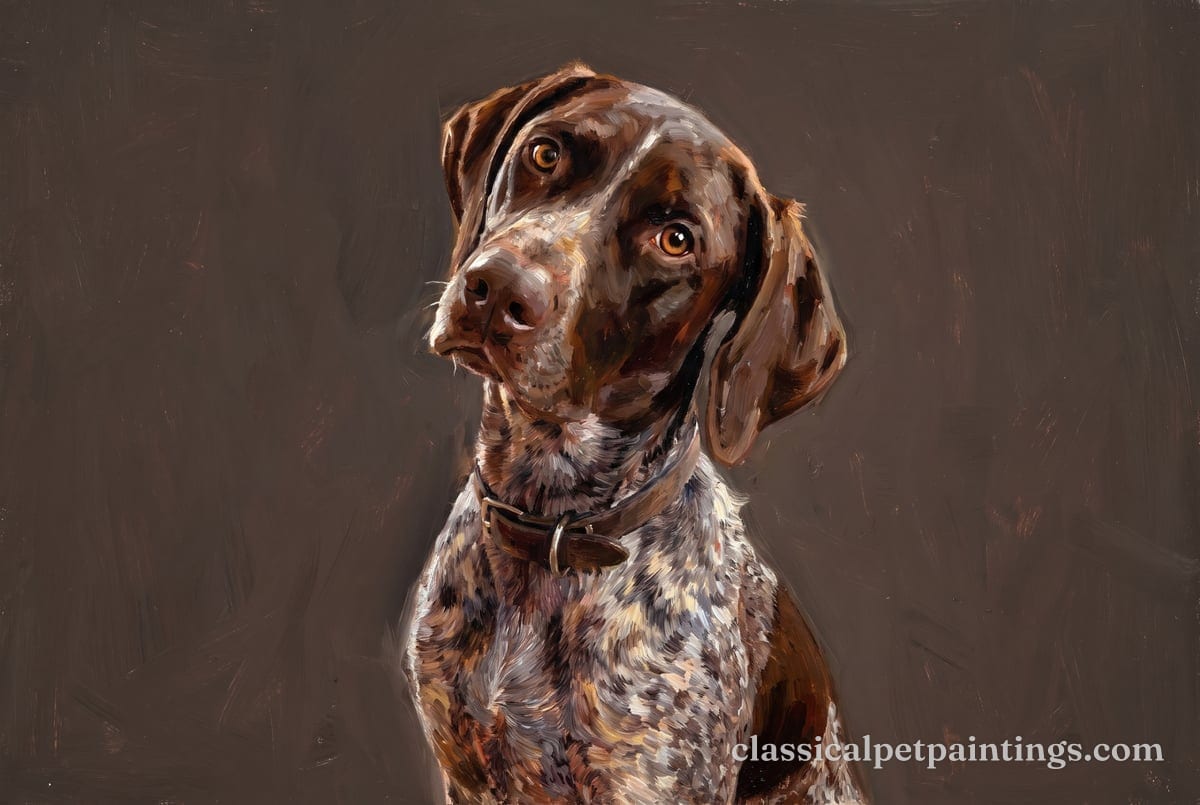
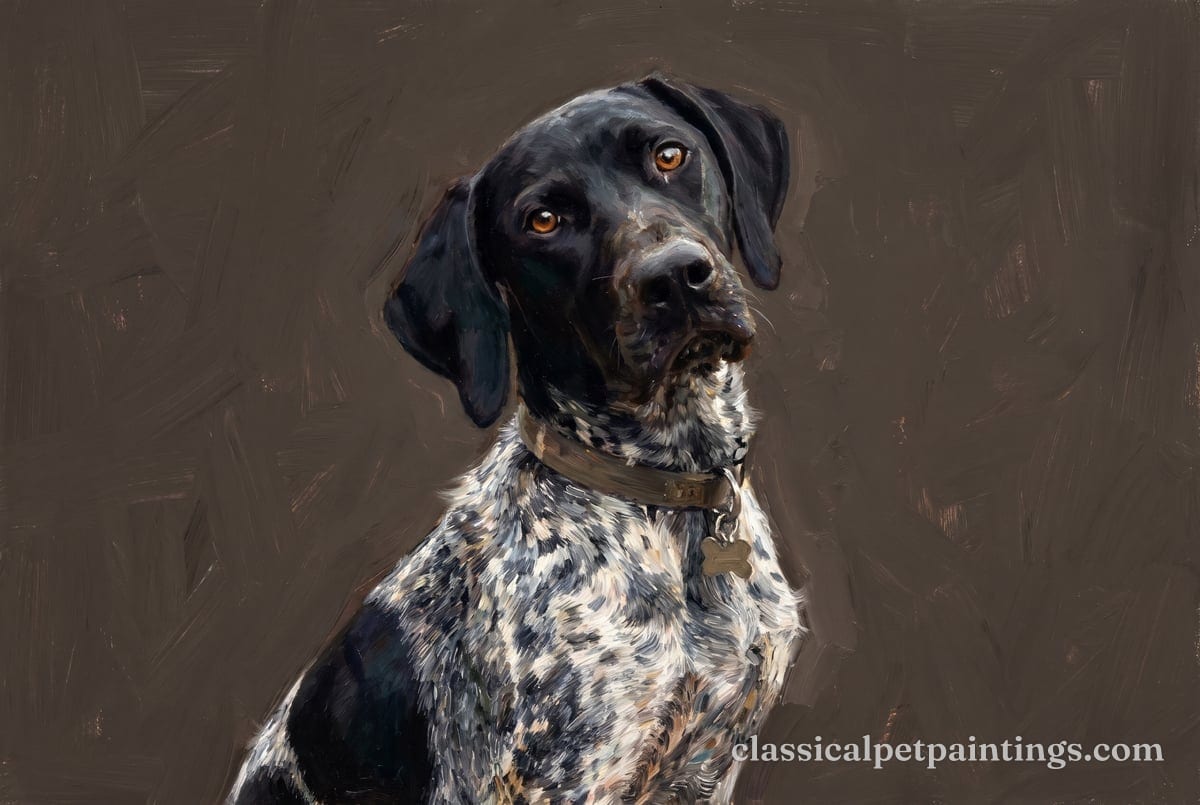
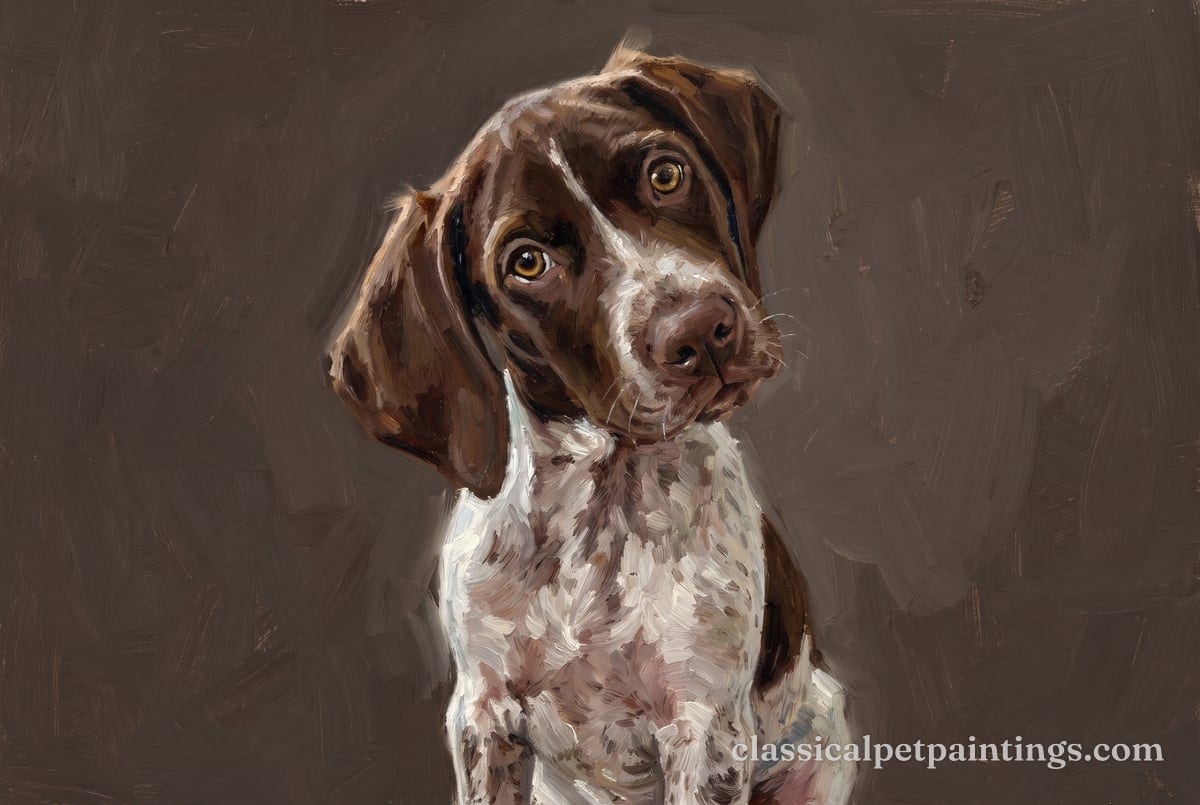
Your GSP's head tipped to one side, ears dropped, eyes on you: a pointer's ticked or solid coat in loose oil paint on a dark brown ground.
Examples
A German bird dog built to do everything
The German shorthaired pointer is a hunter's dog from Germany. The AKC traces the German bird-dog tradition to at least the 1700s, when breeders crossed tracking hounds with pointing dogs in search of a fast, powerful hunter with a good nose. The breed was settled sometime in the 1800s, and one of the men behind it was a nobleman, Prince Albrecht zu Solms-Braunfels.
The aim was a dog that could do every job in the field: point a bird and hold it, follow a trail at night, retrieve a duck from the water and bring game back on land, then come home as a family watchdog. Webbed feet and a sleek, sturdy build make the GSP one of the best swimmers among dogs. It is still one of the top-winning breeds in hunting events, and it ranked ninth in the AKC's registrations for 2025.
The standard allows only liver and black, solid or mixed with white: liver roan, liver patched and white ticked, black roan, black patched and white ticked, and the solid coats. The coat is short, thick and tough, softer and shorter on the head and the ears. The ears are broad, set fairly high, and lie flat against the head. The standard asks for a dog that is friendly, intelligent and willing to please, with a keen enthusiasm for work.
The Curiosity style on a GSP
Curiosity is one of the shop's own house styles, not a copy of an old master. It paints the moment you say a word your dog knows: the head tips to one side and the eyes fix on you. The picture is wide and shows the head and the chest against a plain, dark brown ground, with nothing else in the room.
A pointer suits the pose. Its broad, flat ears hang close to the head, so when the head tilts, one ear swings out and the other falls along the cheek, and the tilt reads at once. The short coat lies close over the skull and the neck, so the paint follows the bone and the muscle under it instead of a mass of fur.
The ticking is where the brushwork shows. A roan or ticked coat comes out as many short, broken strokes of liver or black over white, and the solid liver head and ears are painted in warm browns with a sheen of light along the top. The coat pattern, the patches and the eye color come from your photo; only the pose, the ground and the paint come from Curiosity.
A gift for a GSP's people
A German shorthaired pointer spends much of its day moving: in the field, on a run, at the water. The tilted head is one of the few times it is still and looking right at you. This painting keeps that look for a wall at home.
It suits a birthday, a puppy's first year, a dog that has just finished its first hunting season, or an old pointer with a gray muzzle. For a dog that has died, an older photo works, as long as the face is clear.
Questions
Will the painting keep my pointer's own markings?
Yes. The painting is made from your photo, so the patches, the ticking, the head color and any white blaze are your dog's. You see the painting before you pay.
Does the Curiosity style work for black and liver GSPs?
Yes. A liver coat is painted in warm browns and a black one in blue-black with light along the head, so the face stands out from the dark brown ground. A roan or ticked coat is painted in broken strokes over white.
My GSP never sits still. What photo works best?
A photo taken when your dog has stopped to listen to you: in daylight, both eyes in focus, and the whole head in the frame with both ears. A head already tilted suits this style best, but a straight-on face works too. Phone photos are fine.
Does the painting show the whole dog?
No. Curiosity shows the head and the chest, so the tilt and the eyes are the center of the picture. For a pointer standing in the field, choose another style.
Your pet, in Curiosity
Fine-art print
- 8×10"
- $89
- 12×16"
- $92
- 12×18"
- $95
- 18×24"
- $115
- 24×36"
- $127
Luxury canvas
- 12×16"
- $149
- 12×18"
- $157
- 18×24"
- $199
- 24×36"
- $254
- 28×40"
- $399
- 40×60"
- $849
Digital file
- Download
- $39