Pomeranian portraits in 18th Century Royalty
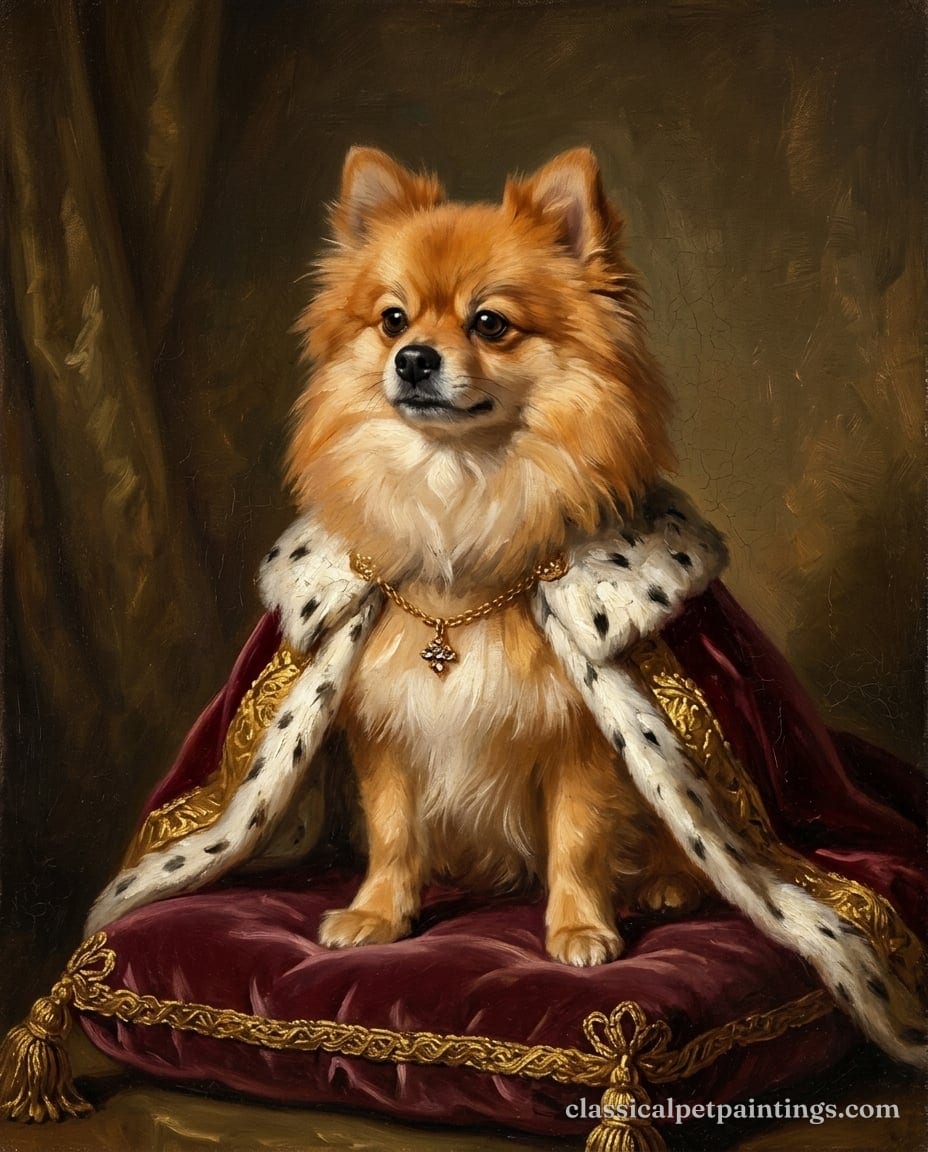
Your Pomeranian as an old-master oil portrait: seated on a velvet cushion, its ruff rising from an ermine-trimmed cloak, painted from your photo.
Examples
The spitz that royals made small
The Pomeranian is the smallest of the spitz breeds, a toy relation of the Arctic sled dogs. It takes its name from Pomerania, a Baltic region now split between Poland and Germany, where its ancestors were bred down from much bigger spitz dogs. The breed standard asks for a compact, short-backed dog of three to seven pounds, with a fox-like expression, small ears carried erect, and a heavily plumed tail set high and lying flat on the back.
Painters and royals made the breed famous.Thomas Gainsborough painted Pomeranians in the 1770s and 1780s, larger dogs than today's but already with the heavy coat and the tail over the back; his Pomeranian Bitch and Puppy, from about 1777, is in Tate's collection. A century later Queen Victoria bred and showed the breed, entering six of her own dogs at Crufts in 1891, and she is credited with bringing it down from about thirty pounds to its toy size.
AKC sums up the temperament as inquisitive, lively and bold: a few pounds of dog with a commanding, big-dog manner, alert enough to make a keen watchdog. The double coat is the breed's signature, a dense undercoat under long, harsh guard hair that stands off the body and forms a ruff around the neck. It comes in almost two dozen colors and many patterns, all judged equally under the standard, though orange and red are the colors seen most.
A Pomeranian at court
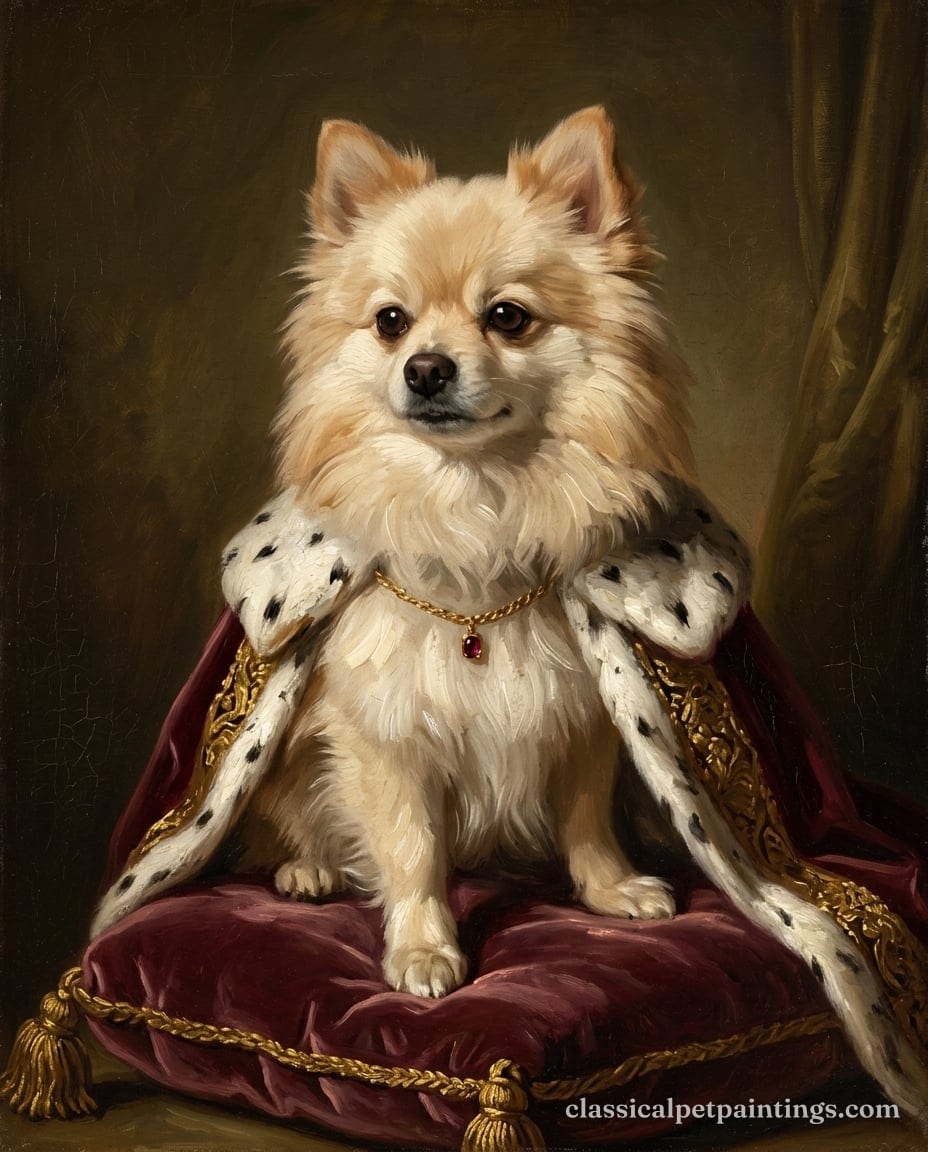
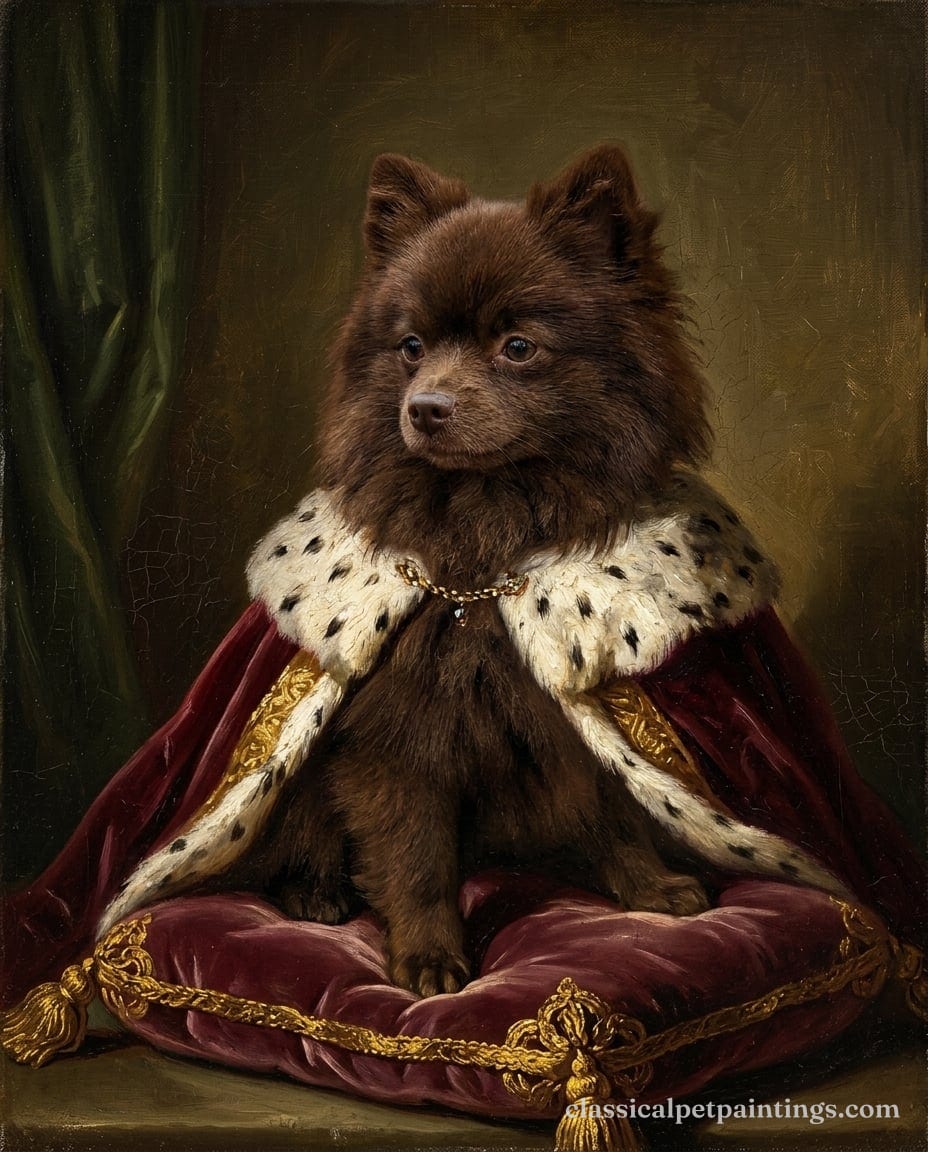
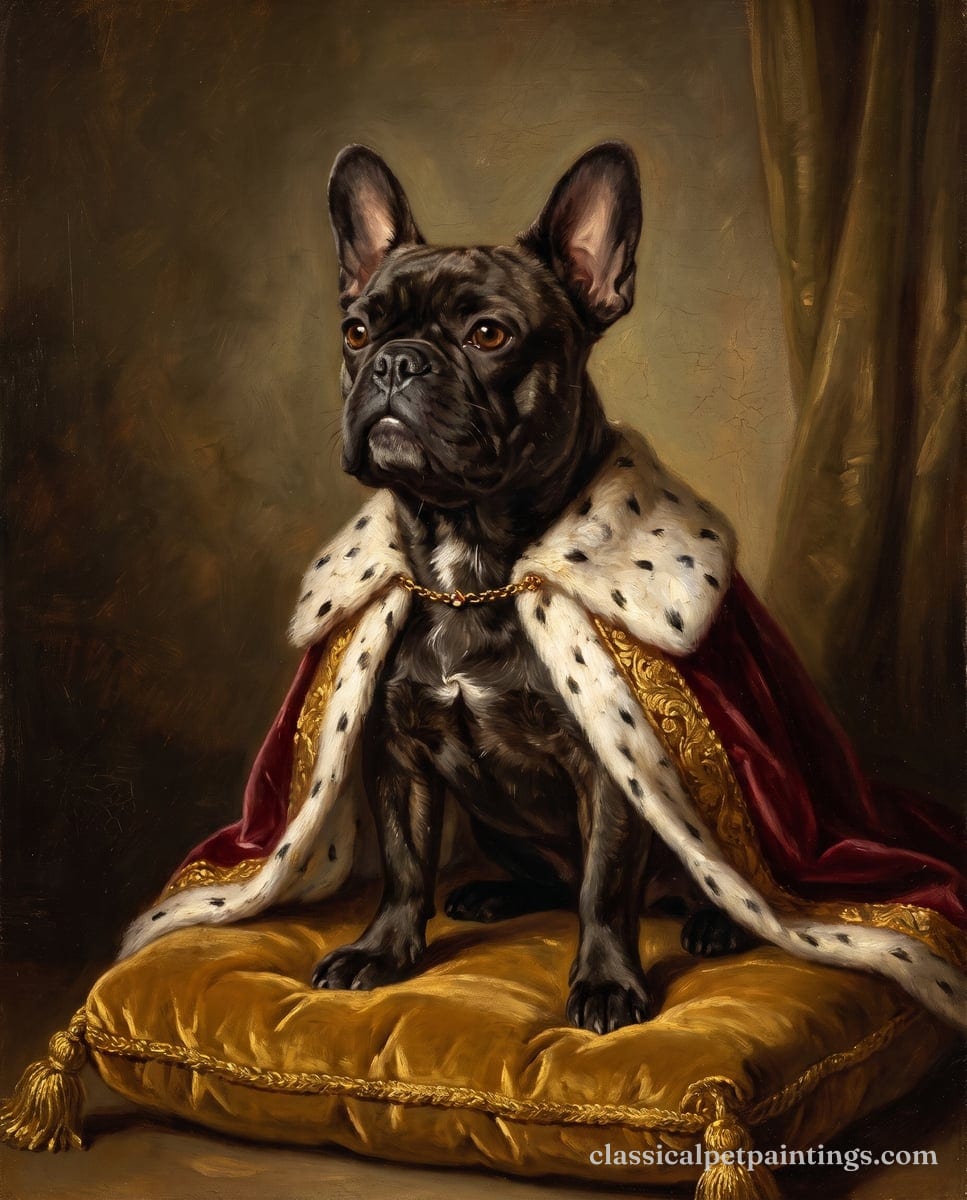
18th Century Royalty paints the pet as an old-master oil portrait. The dog sits on a velvet cushion edged in gold braid and tassels, a crimson cloak trimmed in ermine over its shoulders and a gold chain with a small jeweled pendant at its throat, against a dark, warm ground with a fall of drapery. The surface carries the fine crackle of an old varnished canvas.
Few breeds wear the costume as naturally as the Pomeranian. Its ruff, the frill the standard asks to frame the head and run over the shoulders and chest, rises straight out of the ermine collar, so the dog's own coat and the white fur meet at the throat. The fox-like face and the small upright ears sit high over the robe, which gives a dog of a few pounds the bearing of a sitter for a state portrait.
The style sets its own scene, whatever the photo: a Pom photographed on a garden path, a sofa or a bed of autumn leaves arrives on the cushion under the cloak. The cloak falls over the back, where the plumed tail lies. The coat color and the face come from the photo, and each holds its own against the crimson and gold: an orange Pom glows warm on the dark ground, a cream one reads pale and soft beside the ermine, and a chocolate one, brown nose and all, stands out against the white fur of the collar.
A portrait with the breed's own history
For a Pomeranian owner, a royal portrait is a nod to the breed's past, from the Pomeranians of eighteenth-century painters to Queen Victoria's kennels. A phone photo is enough to begin. The painting is there to see before anyone pays, and another photo or another style is free to try. One photo can hold more than one pet, so a household with two Poms can start from a single picture of both.
Questions
Does the painting keep my Pomeranian's coat color?
Yes. The color comes from your photo, so an orange Pom stays orange, a cream one stays cream, and a chocolate one keeps its brown coat and brown nose under the ermine collar. The breed standard allows every color and pattern.
Will my Pomeranian's plumed tail show in this style?
Often not. The cloak falls over the back, where a Pom carries its tail, so the plume is usually under the robe. The portrait centers on the face, the ruff and the ermine collar.
What photo of a Pomeranian works best?
A photo in daylight with the face in focus and the whole head in the frame; a phone photo is fine. Avoid filters, costumes and heavy shadows. The style sets its own pose and scene, so where the photo was taken matters little.
Is the Pomeranian really a royal breed?
Royal owners did much to shape it. Gainsborough painted the larger Pomeranians of the eighteenth century, and Queen Victoria bred and showed the breed and is credited with reducing it to toy size.
Can I see the painting before I order a print?
Yes. The painting appears before you pay, another photo or another style is free to try, and only the painting you approve is printed.
More paintings
Your pet, in 18th Century Royalty
Fine-art print
- 8×10"
- $89
- 12×16"
- $92
- 12×18"
- $95
- 18×24"
- $115
- 24×36"
- $127
Luxury canvas
- 12×16"
- $149
- 12×18"
- $157
- 18×24"
- $199
- 24×36"
- $254
- 28×40"
- $399
- 40×60"
- $849
Digital file
- Download
- $39