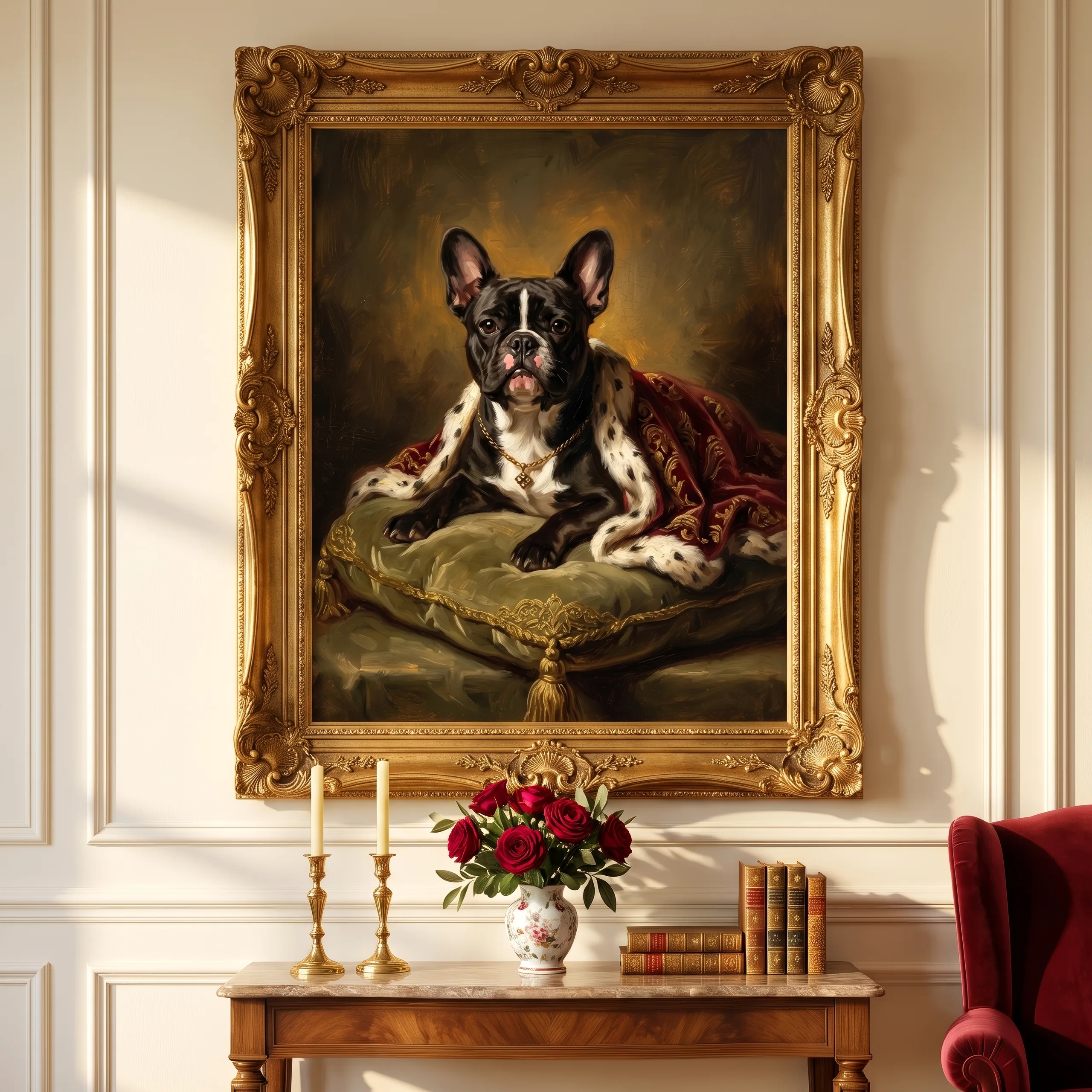
Your pet, in 18th Century Royalty.
For three centuries, the world's greatest portraits followed a single formula, created for a king. Your pet is next in line.
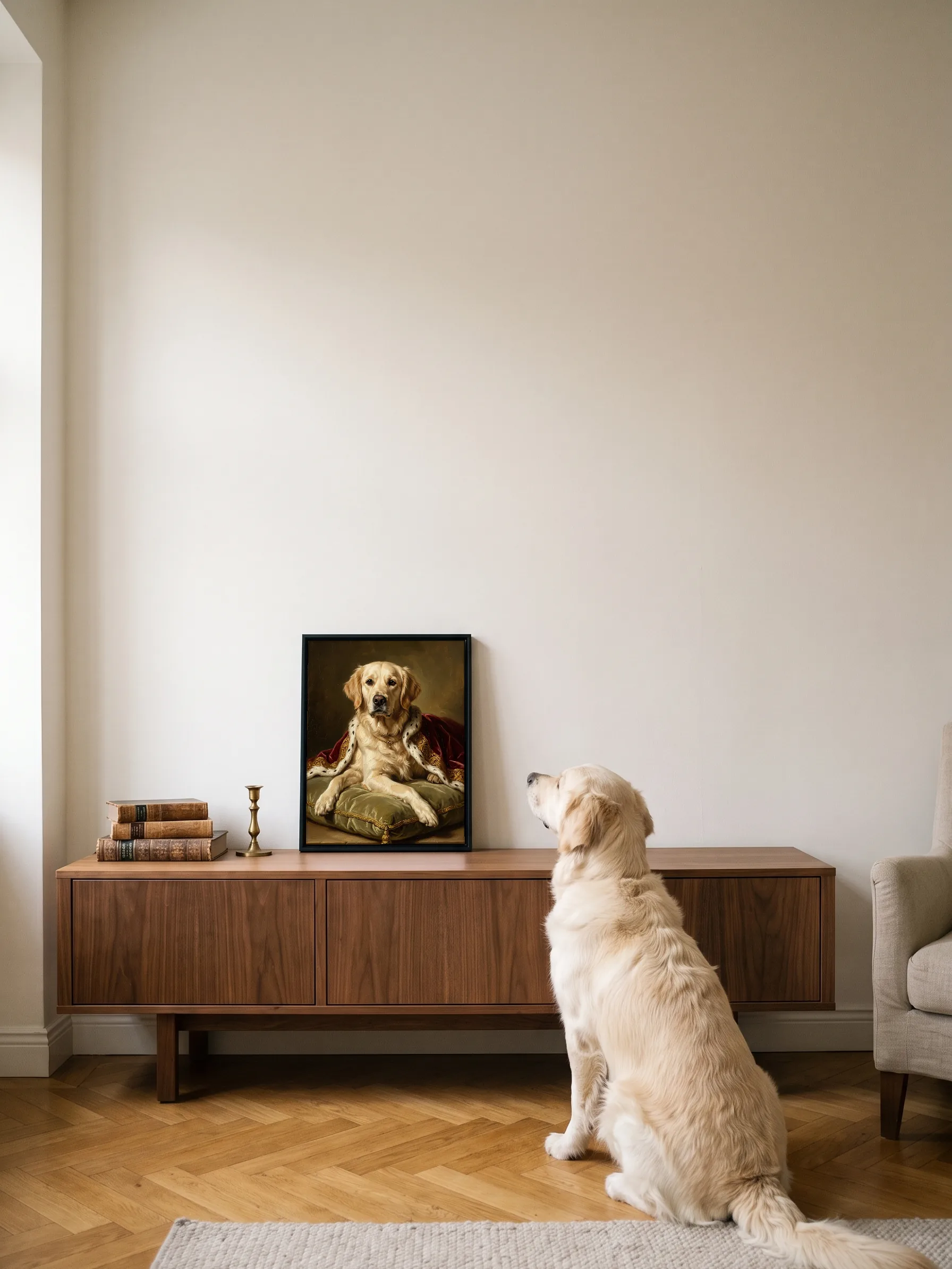
Pet portraits that actually look good.
Every marking and whisker, composed like real art.
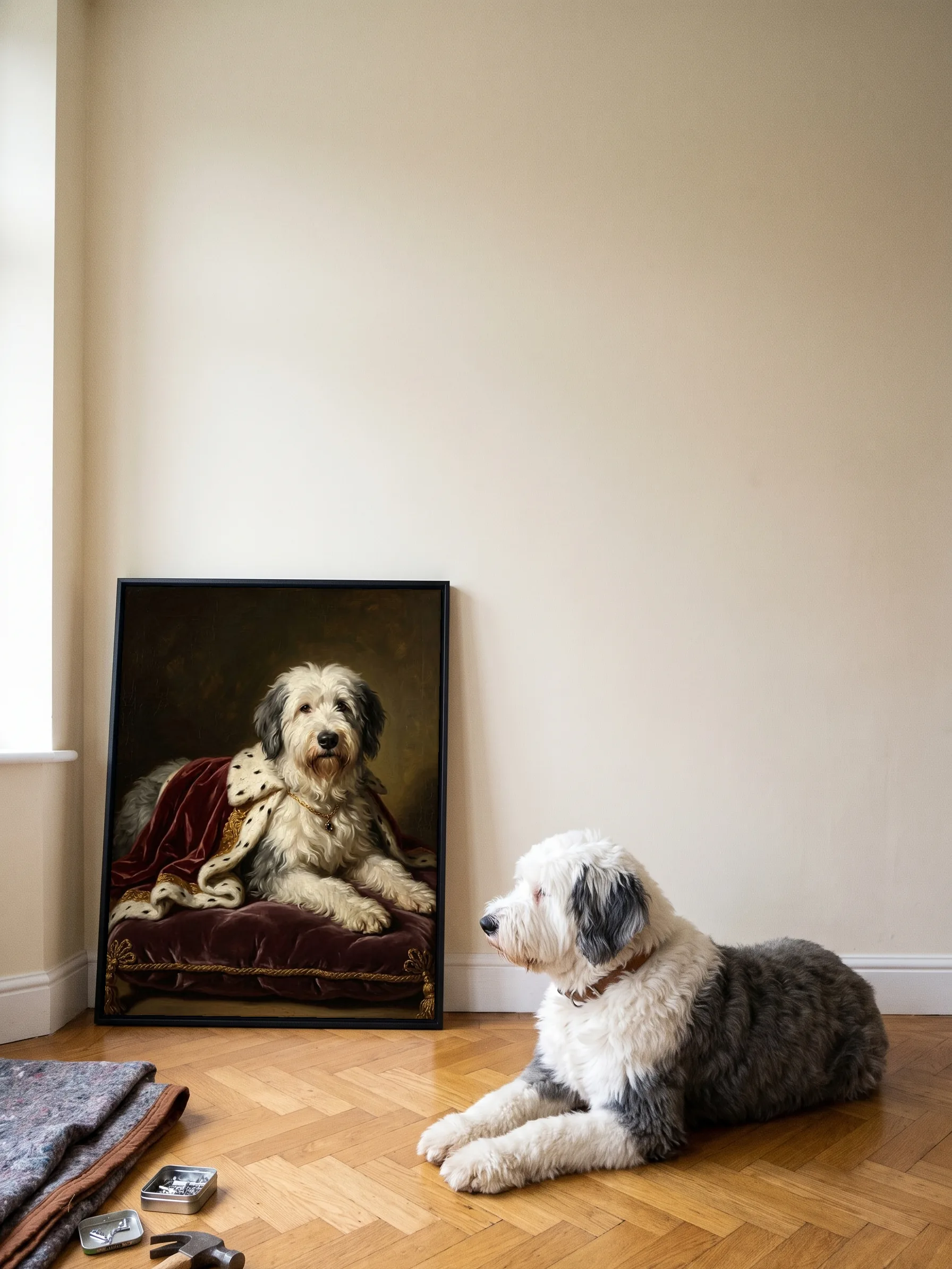
Beautiful and durable by design.
400gsm artist-grade canvas, solid pine frame, printed and framed in the USA.
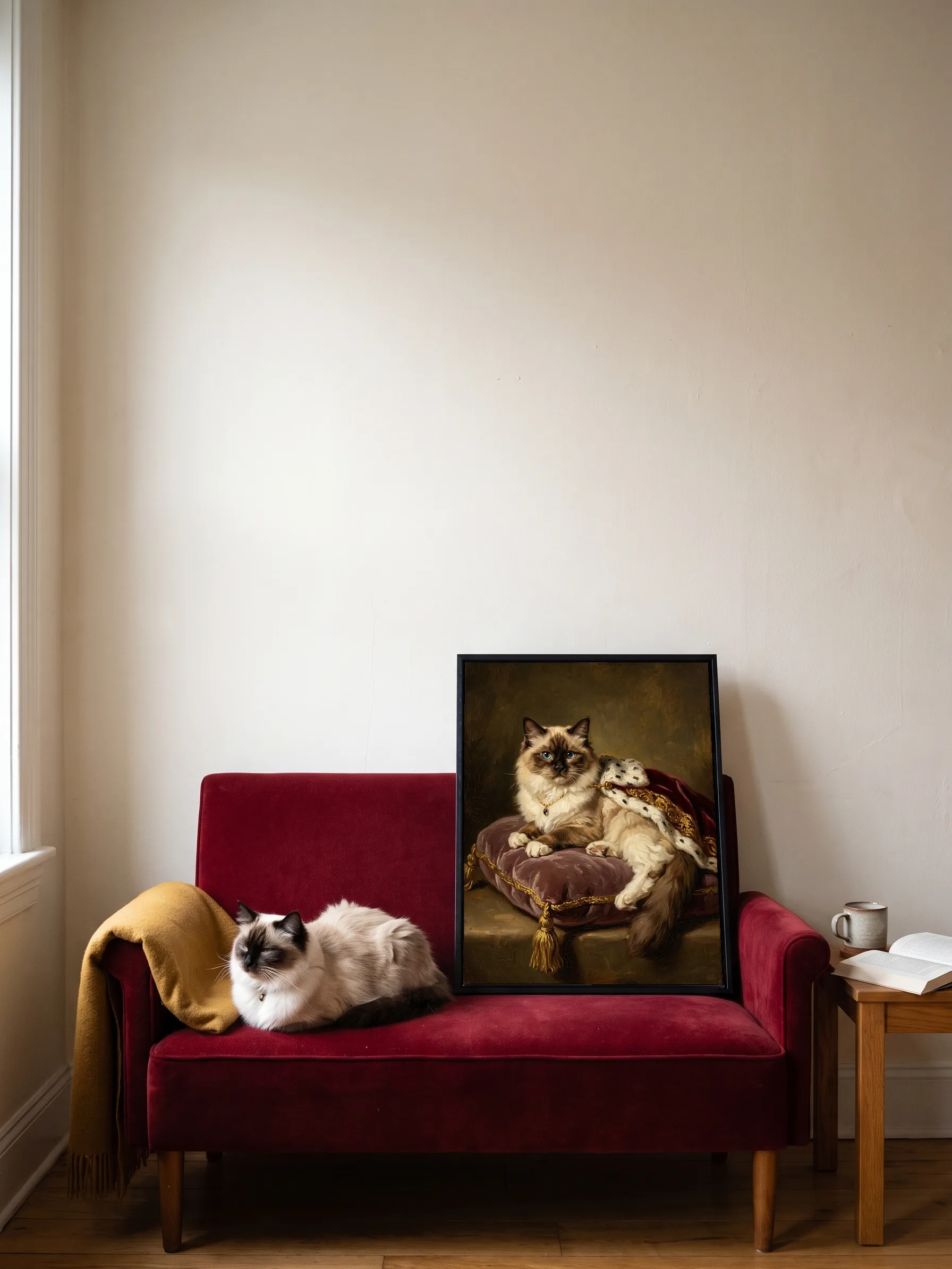
Preview before you buy.
No paying first and waiting days for a proof.
See it now, then decide.
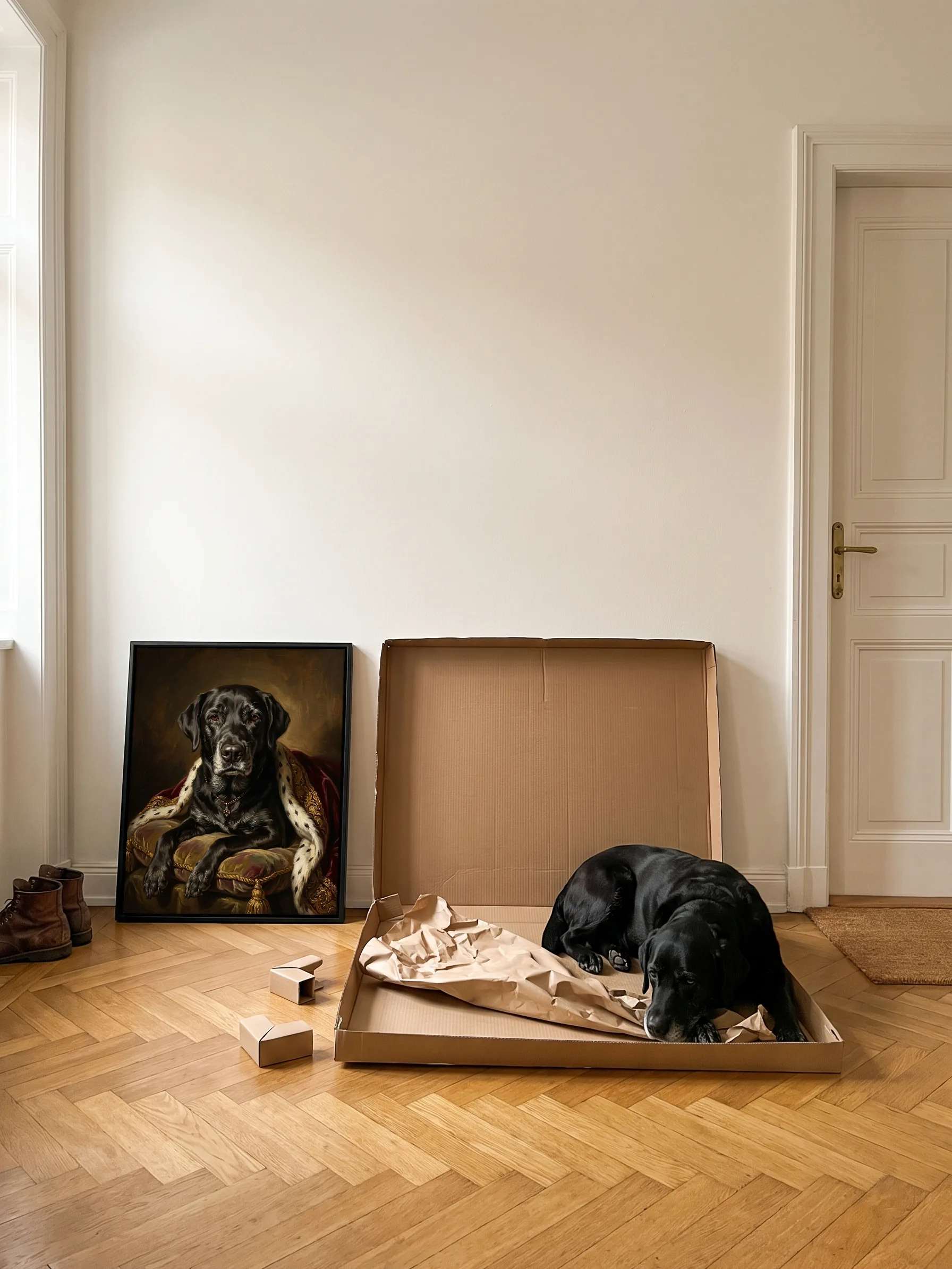
Delivered to your door in 8 days.
Made in 5 days, shipped in 3, ready to hang.
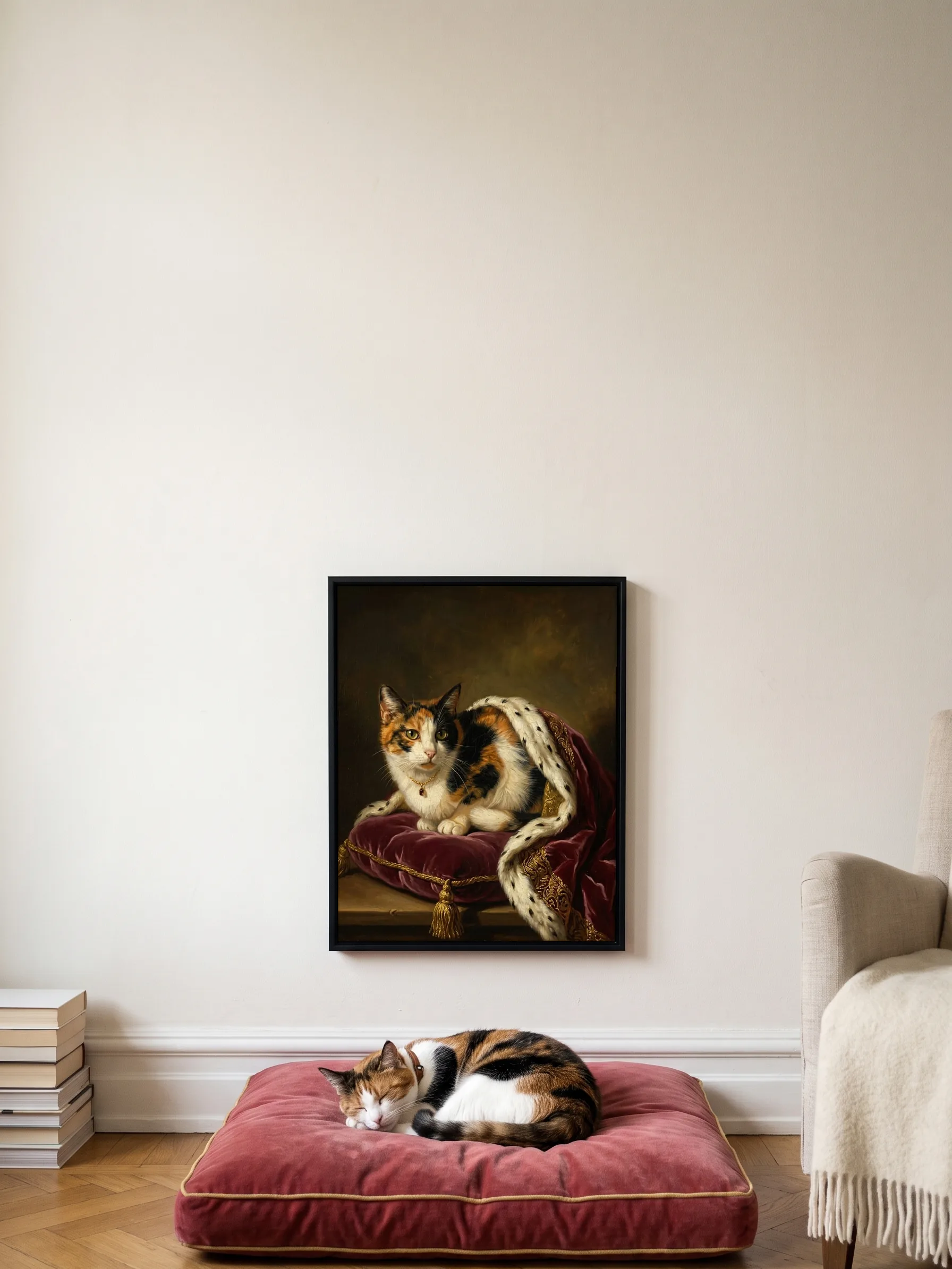
The PetPaintings Promise.
Fading, damage, or defects, covered forever. Lifetime warranty with every purchase.
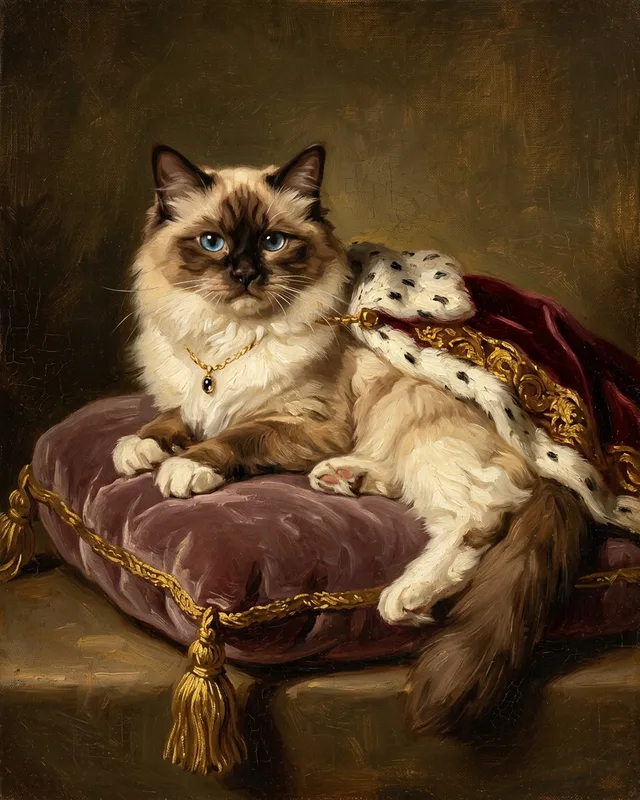
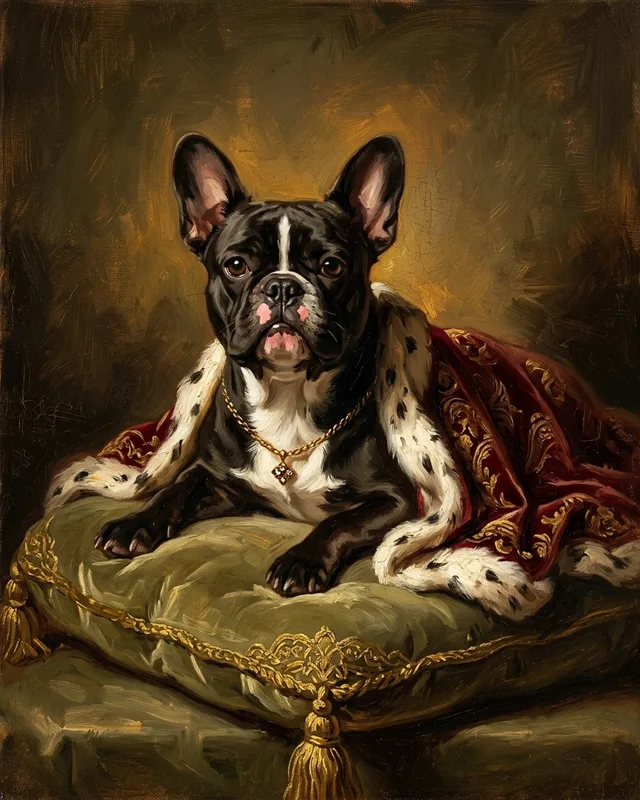
Examples.
Heritage.
Our 18th Century Royalty style takes its ermine, velvet and warm light from these paintings in museum and royal collections.
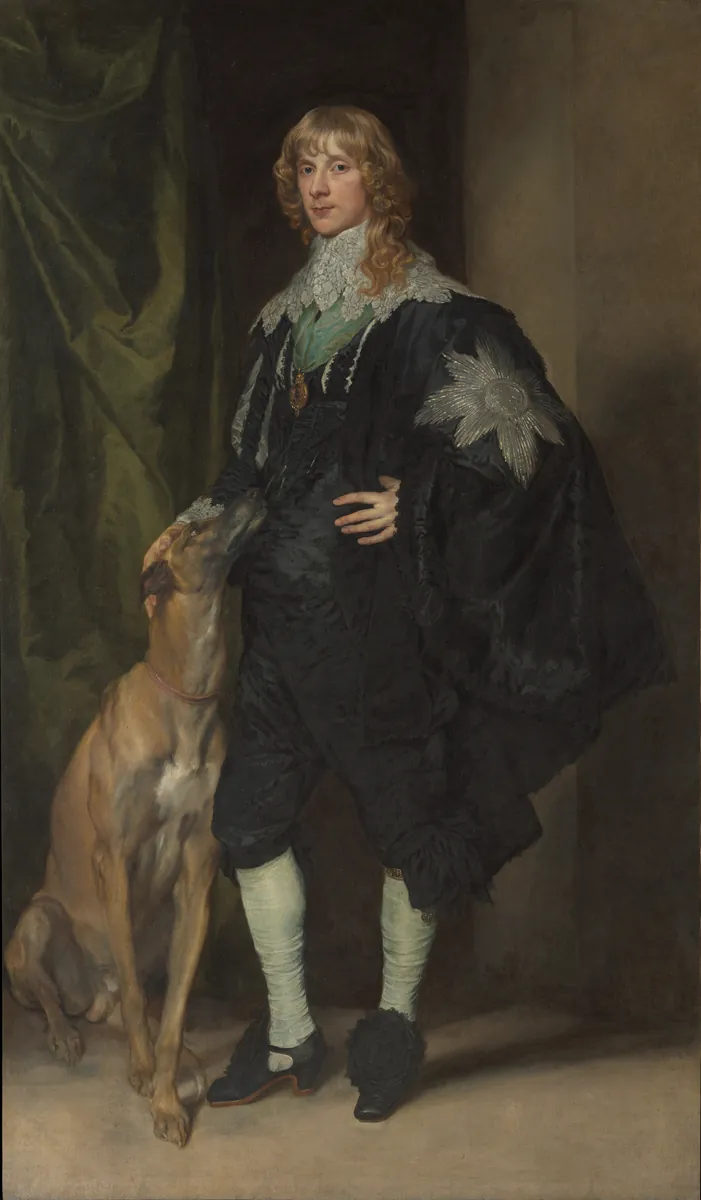
ca.1633–35
James Stuart (1612–1655), Duke of Richmond and LennoxAnthony van DyckThe Metropolitan Museum of Art, New York
Van Dyck paints Charles I's cousin wearing the Garter star, a greyhound at his hip as a sign of loyalty.
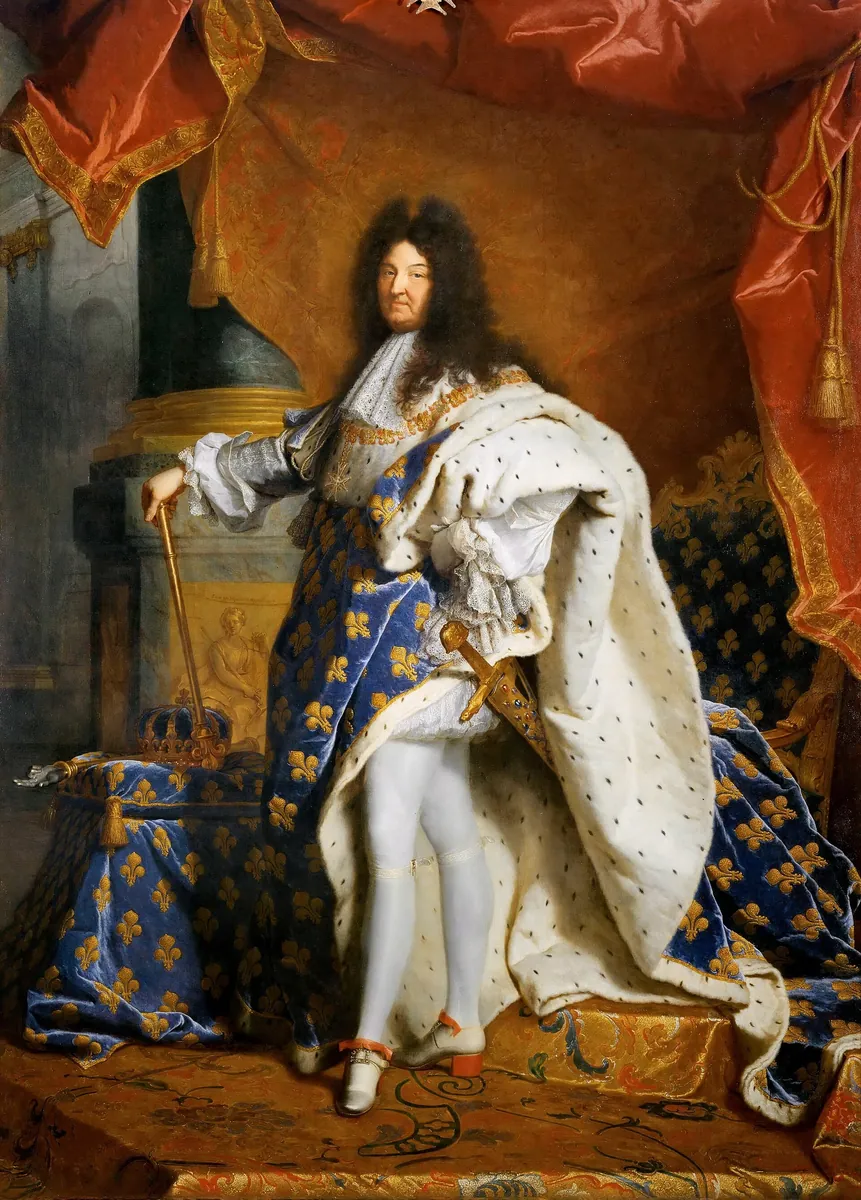
1701
Louis XIV (1638–1715), King of FranceHyacinthe RigaudMusée du Louvre, Paris
Louis XIV wears the ermine-lined coronation mantle; meant for his grandson in Spain, the portrait stayed with the king.
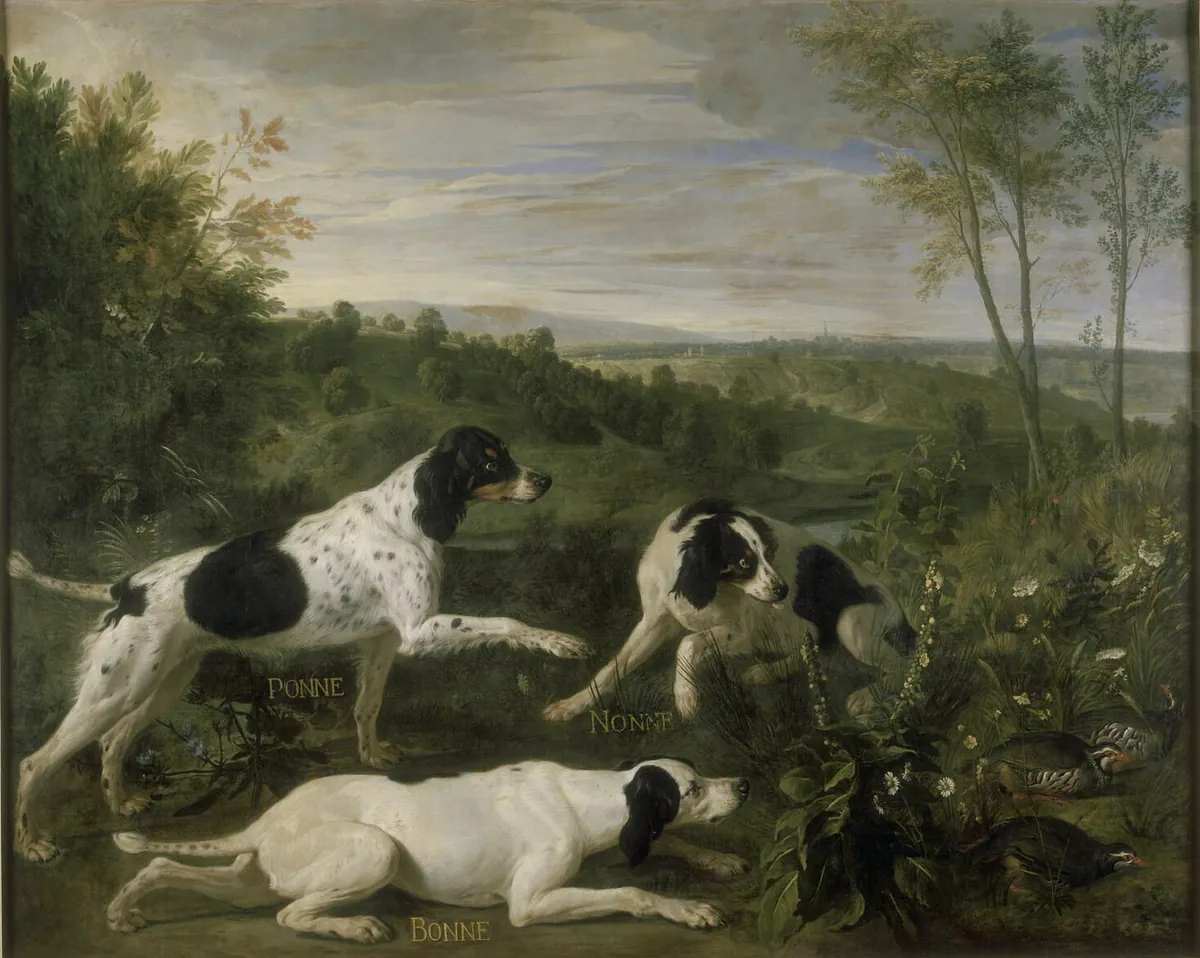
c.1702
Bonne, Nonne and Ponne, Dogs of Louis XIV's PackAlexandre-François DesportesMusée du Louvre, on deposit at the Musée de la Chasse et de la Nature, Paris
Three dogs from Louis XIV's hunting pack, each named in gold letters, painted for the king's own antechamber at Marly.
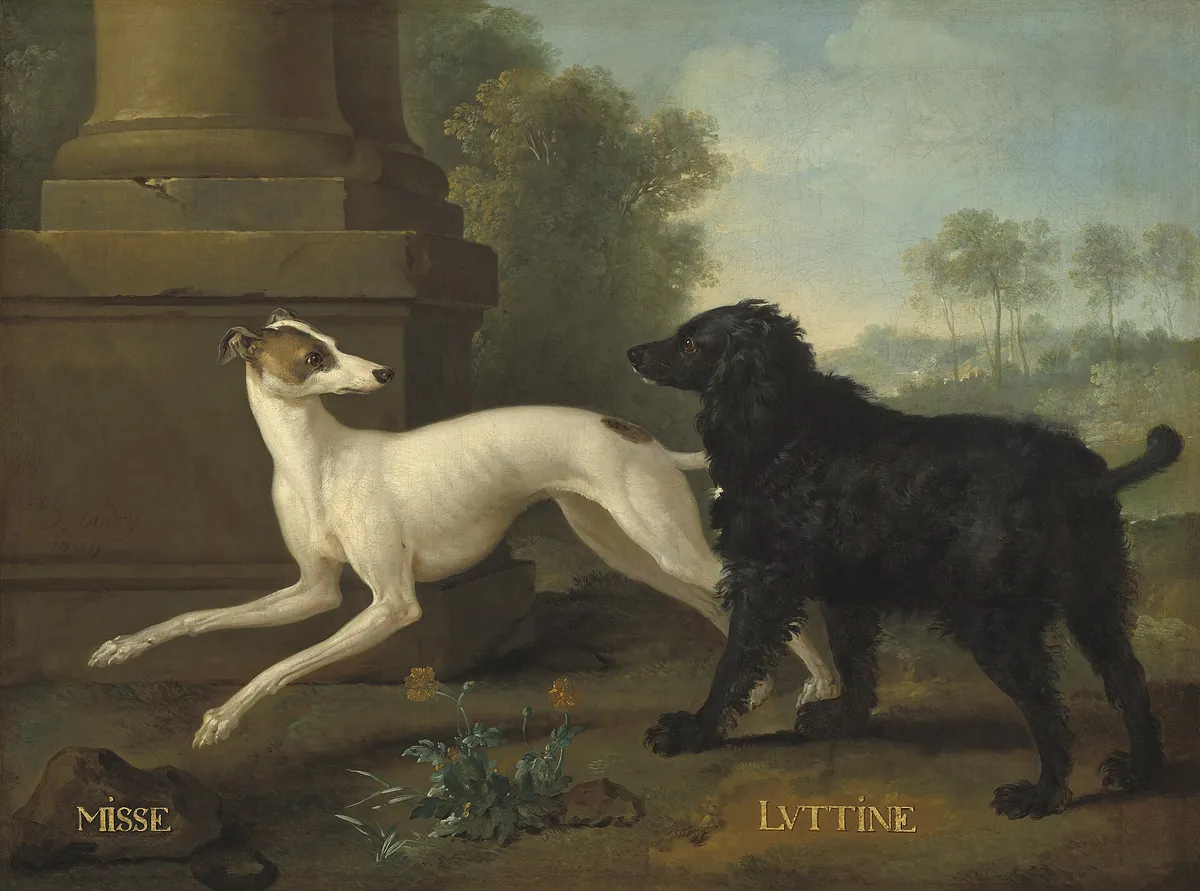
1729
Misse and LuttineJean-Baptiste OudryNational Gallery of Art, Washington
Louis XV commissioned this double portrait in 1729; Oudry lettered each dog's name in gold beneath it.
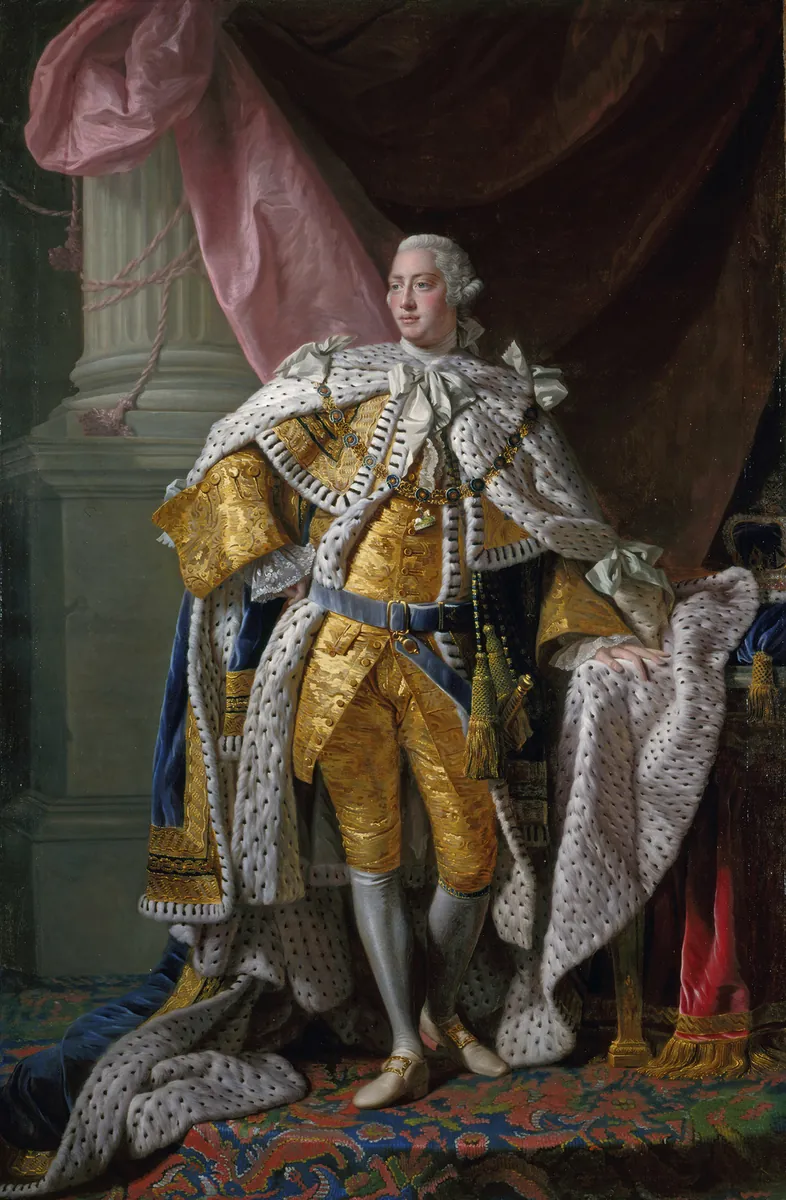
c.1761–62
George III (1738–1820)Allan RamsayRoyal Collection Trust, London
George III in the gold and ermine he wore at his coronation in 1761; orders for over 150 copies followed.
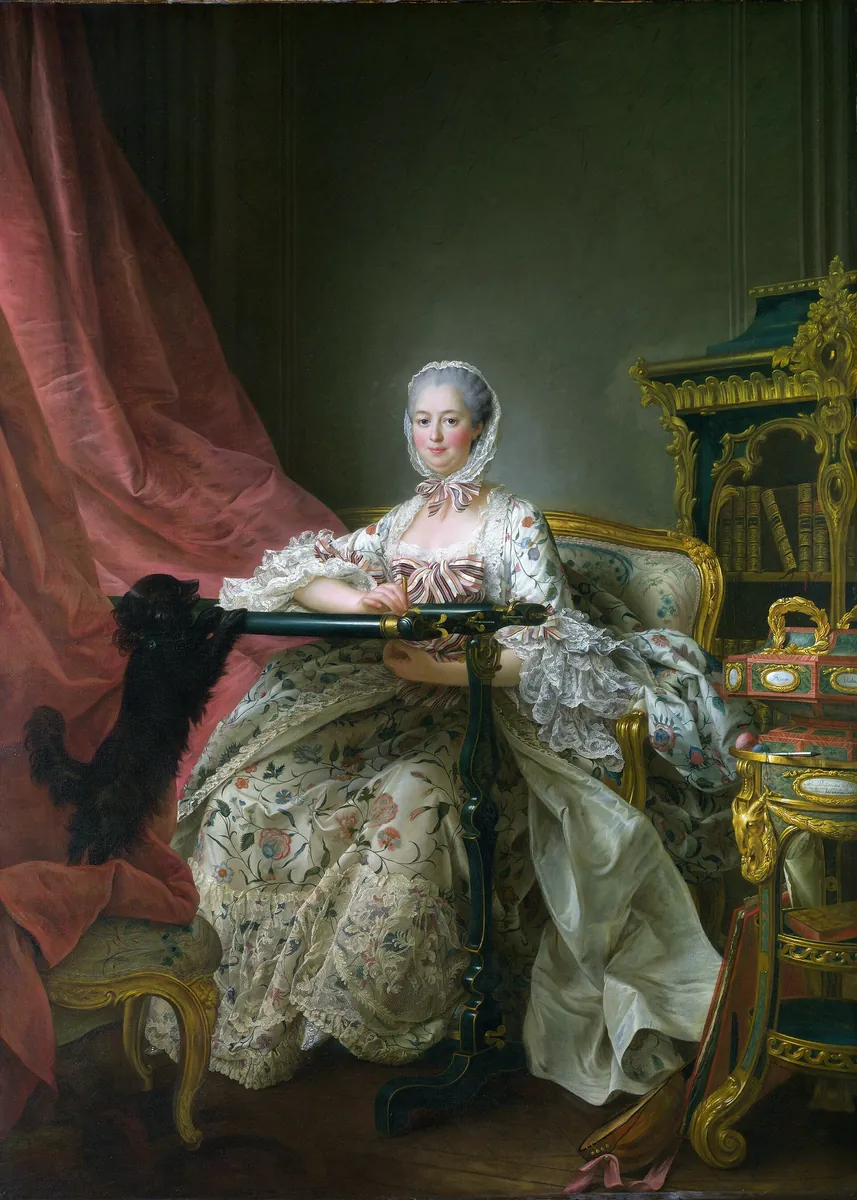
1763–64
Madame de Pompadour at her Tambour FrameFrançois-Hubert DrouaisThe National Gallery, London
Madame de Pompadour, mistress of Louis XV, at Versailles; her black spaniel stands on a stool to reach her embroidery frame.
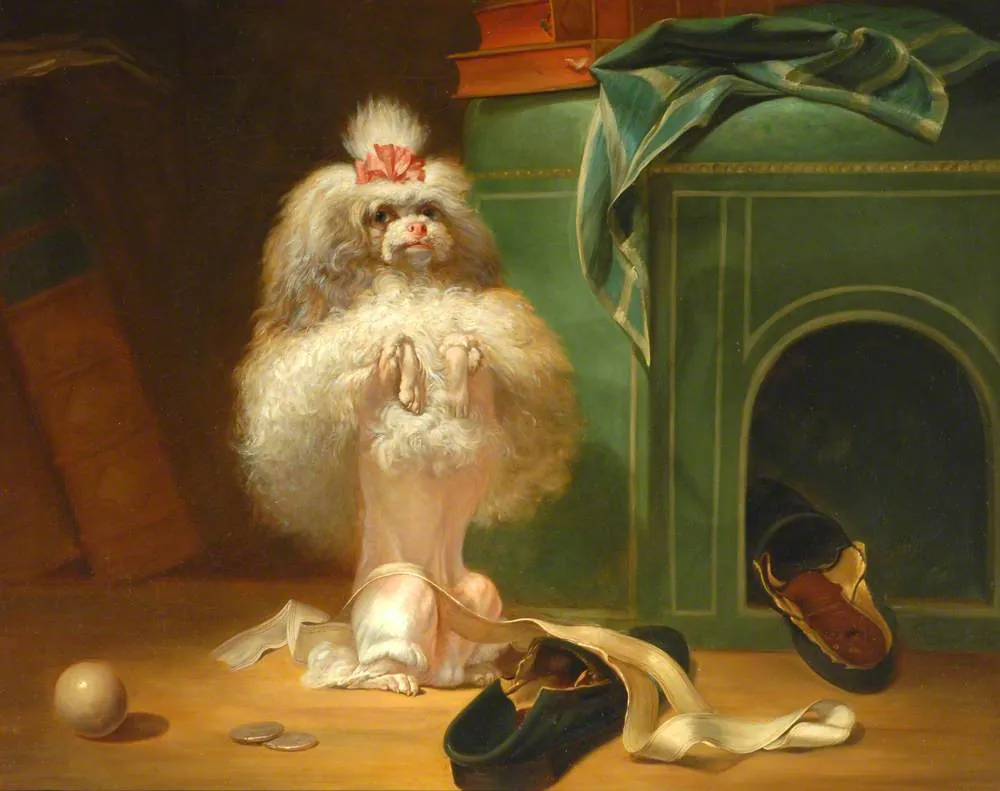
1768
Dog of the Havana BreedJean-Jacques BachelierThe Bowes Museum, Barnard Castle
A Havana lap dog begs among scattered slippers, a pink bow in its topknot: the pet as the only sitter.
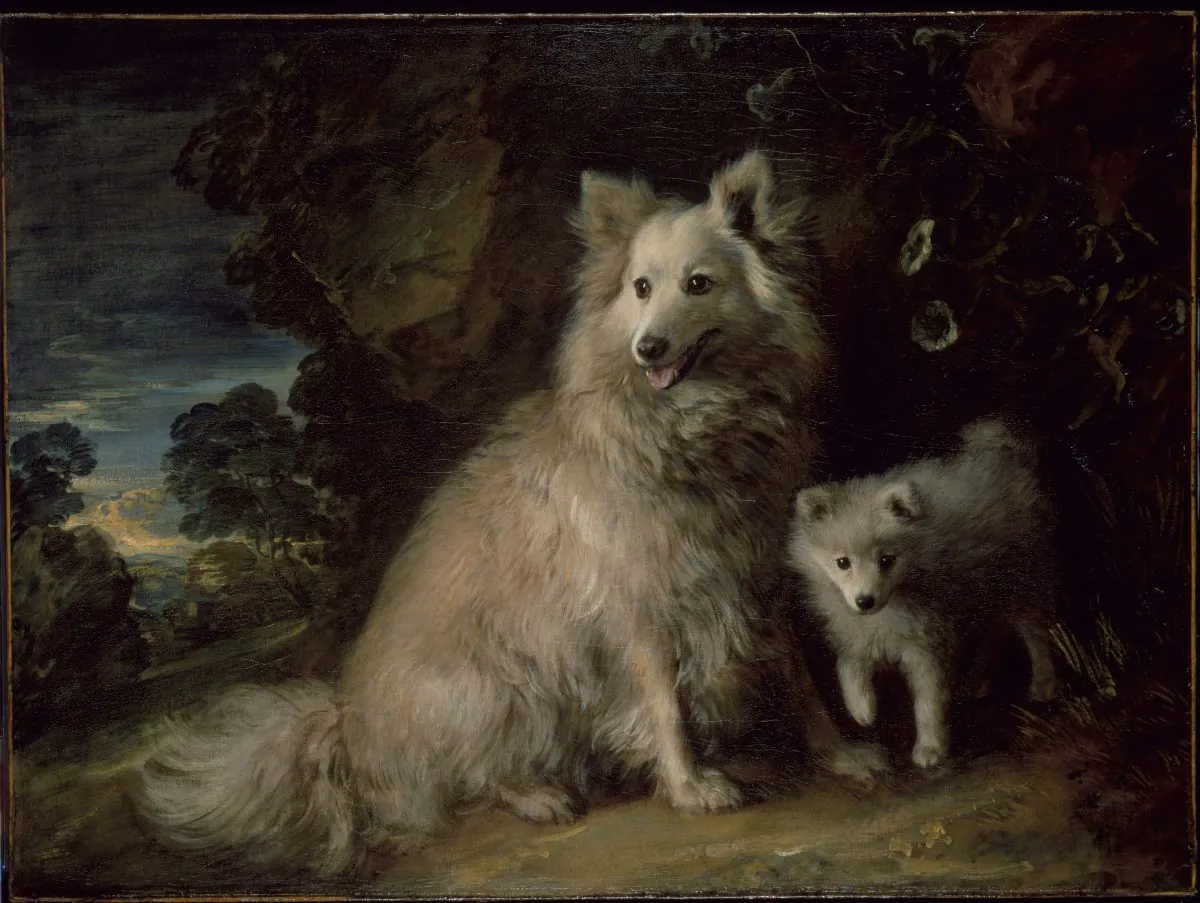
c.1777
Pomeranian Bitch and PuppyThomas GainsboroughTate, London
Believed to be the Pomeranians of Gainsborough's friend, the musician Carl Friedrich Abel; the mother also sleeps in Abel's own portrait.
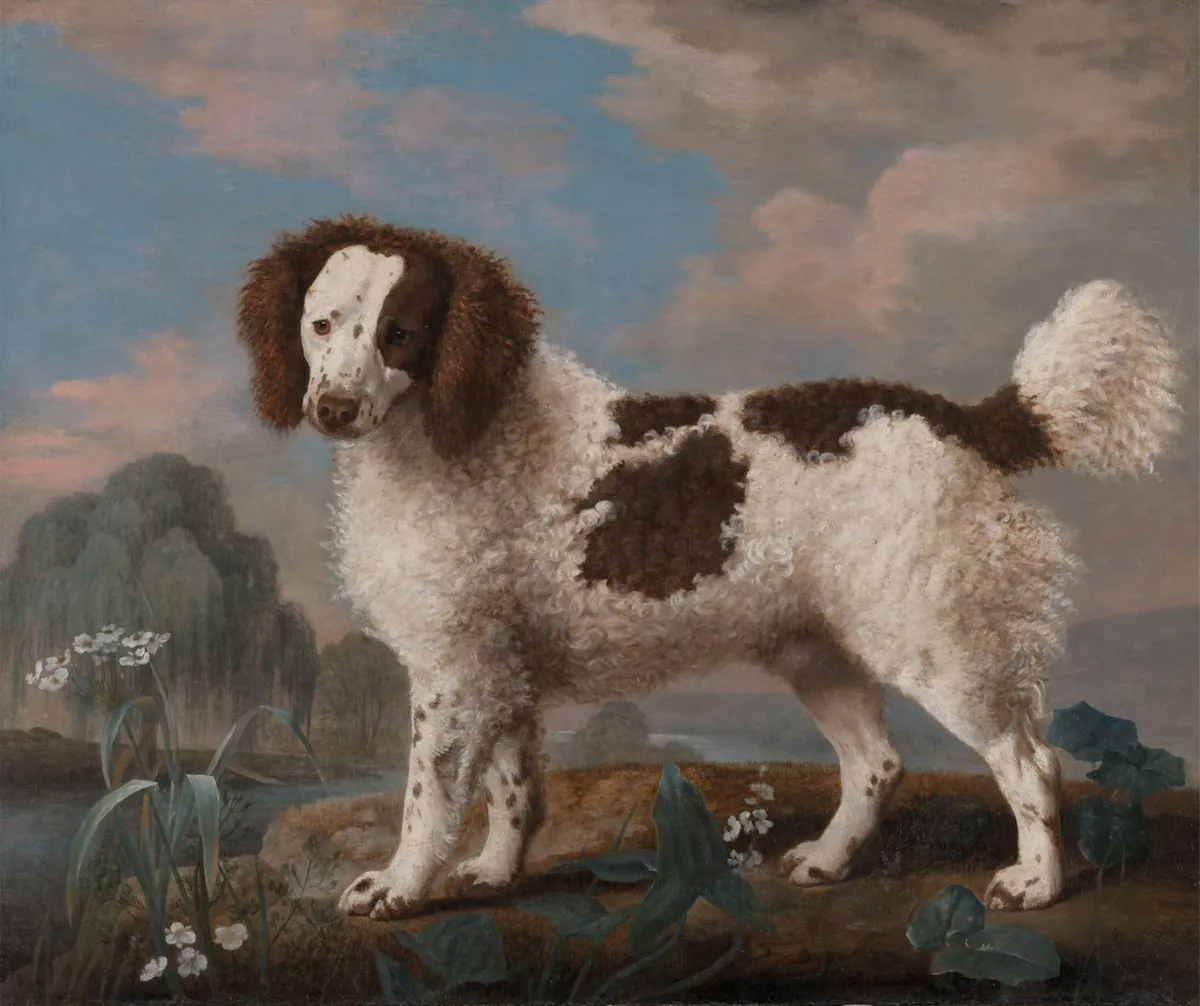
1778
Brown and White Norfolk or Water SpanielGeorge StubbsYale Center for British Art, New Haven
One working spaniel, in profile and large against the sky: Stubbs gives the dog the whole panel, signed and dated 1778.
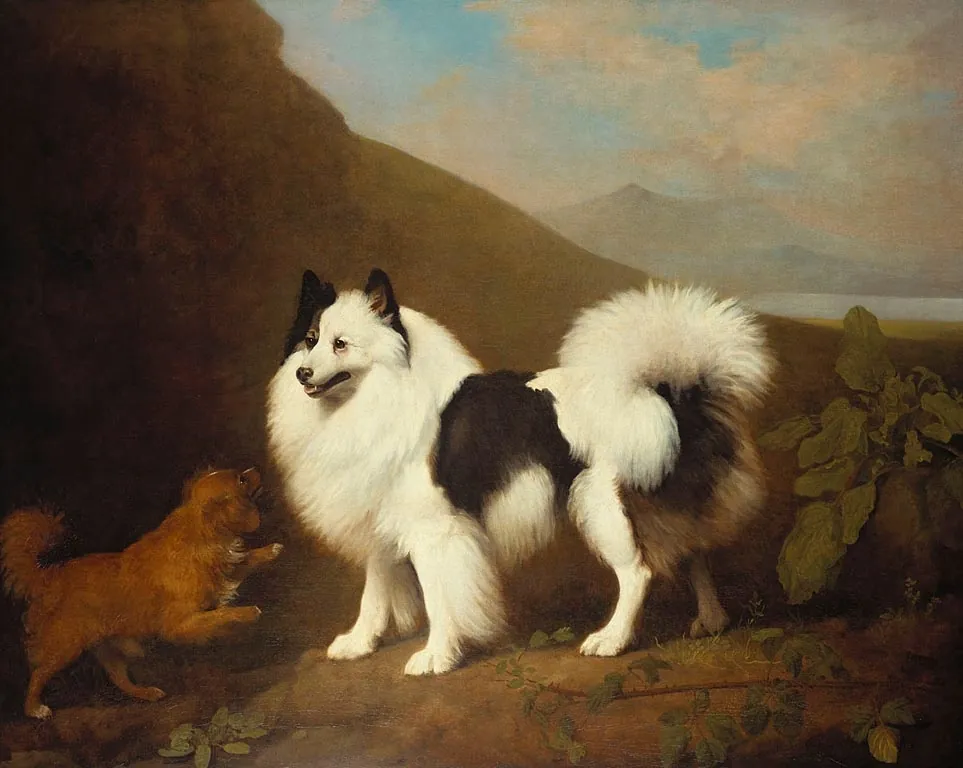
1791
Fino and TinyGeorge StubbsRoyal Collection Trust, London
Fino the spitz and Tiny the spaniel, presumably painted for the Prince of Wales, the future George IV.
18th Century Royalty.
In 1701, the court painter Hyacinthe Rigaud unveiled a portrait of Louis XIV that changed how the world pictured power. The Sun King stood draped in velvet and ermine, his crown resting on a cushion beside him, every fold of fabric and glint of gold arranged to say one thing: here is someone extraordinary. The painting was so admired that Louis kept it for himself rather than send it abroad as intended. For the next hundred years, kings and queens from Madrid to St Petersburg asked to be painted the same way.
Every detail carried meaning. Ermine, the white fur flecked with black tails, was reserved by law and custom for royalty and the highest nobility. Gold chains and jeweled pendants marked membership in the most exclusive orders of chivalry. The velvet cushion was where a monarch's crown was laid. These were never decorations; they were a language of distinction, and anyone in the eighteenth century could read it at a glance.
The royal courts also adored their animals. Louis XIV commissioned portraits of his favorite hunting dogs from the painter Alexandre-François Desportes, and his great-grandson Louis XV did the same with Jean-Baptiste Oudry. Frederick the Great of Prussia loved his greyhounds so dearly that he asked to be buried beside them. When Catherine the Great chose an image of herself for posterity, she was painted strolling through her gardens with her greyhound at her feet. In the grandest households of Europe, a beloved animal was considered entirely worthy of the painter's finest work.
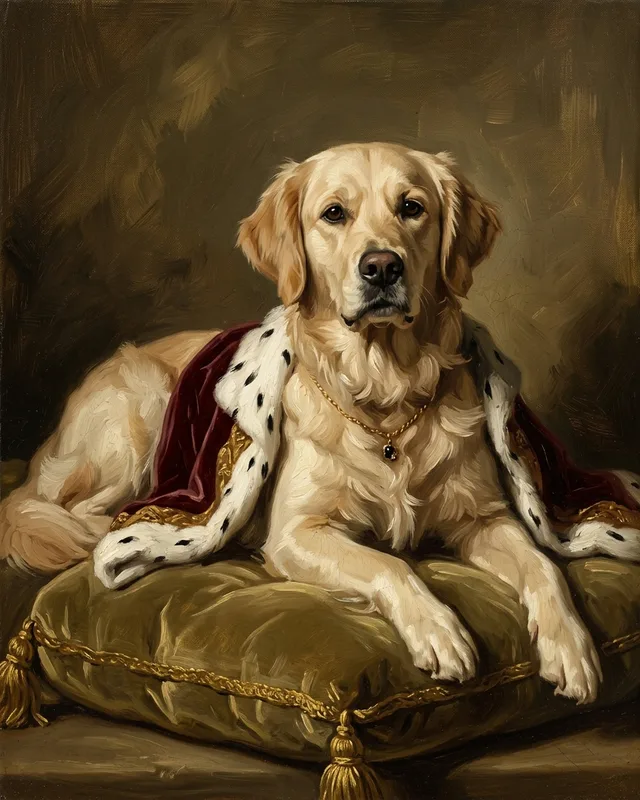
Each PetPaintings portrait follows that tradition. We compose your pet in the manner of the eighteenth-century court painters, with warm candlelit tones, deep shadows, and the rich, layered texture of oil on canvas. The ermine, the velvet and the gold are borrowed faithfully from the age of kings. The expression, the personality and the presence belong entirely to your pet.
Upload a photo to see your free preview, and give the most important member of your household the portrait history always meant them to have.
Questions, answered.
Will it look like my pet?
Yes. The painting is made from your photo, so the face, the fur, and the markings are your pet's. You see it before you pay, and you can try another photo or style first.
Can I see the painting before it is printed?
Yes, always. You see it on a wall before you pay a cent. Not right? Try another photo or style, free. We print only the painting you approved.
How long does it take?
The preview takes about 20 seconds. Made in 2 to 5 business days, then 4 to 6 business days to arrive.
What if it arrives damaged?
Report it from your account within 30 days of shipping: open the order and choose Report a problem. We reply within one business day and ask for photos of the print and the box, then reprint it free or refund your original payment method.